
Cassette Futurism


This work is licensed under CC BY-SA 4.0
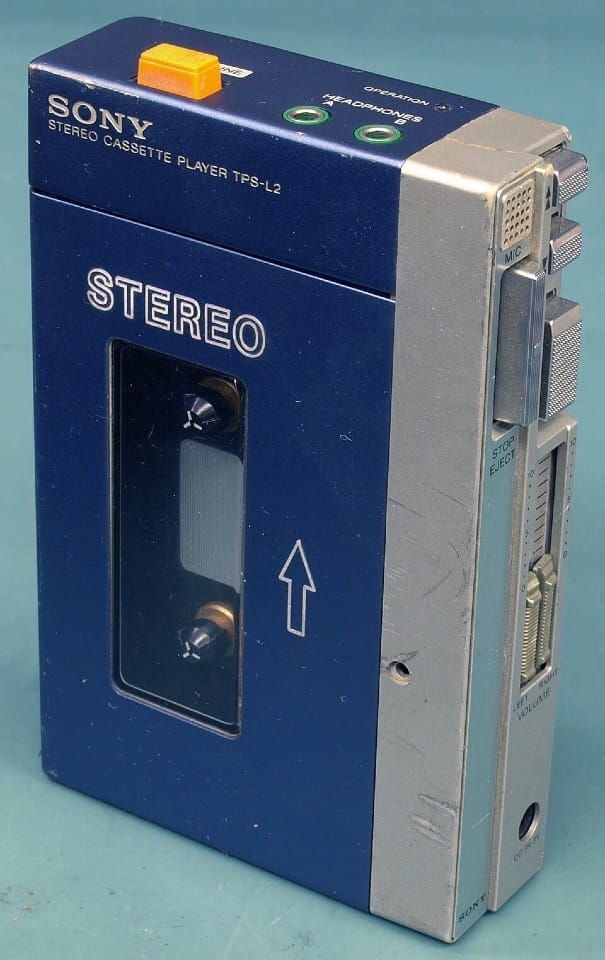
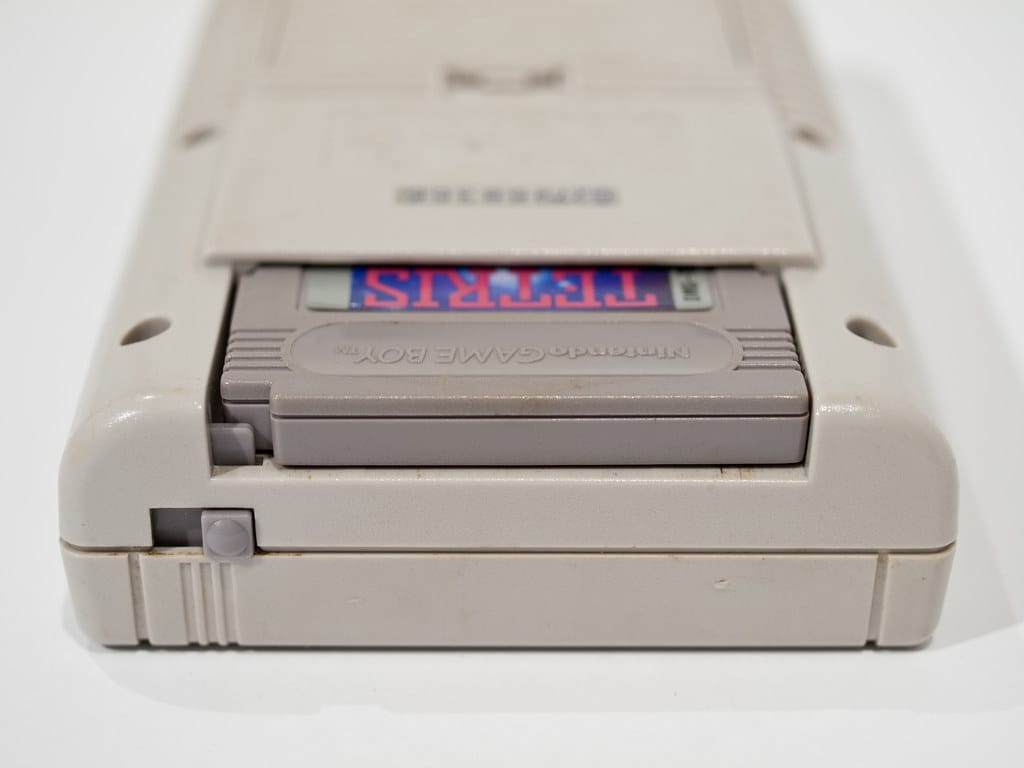
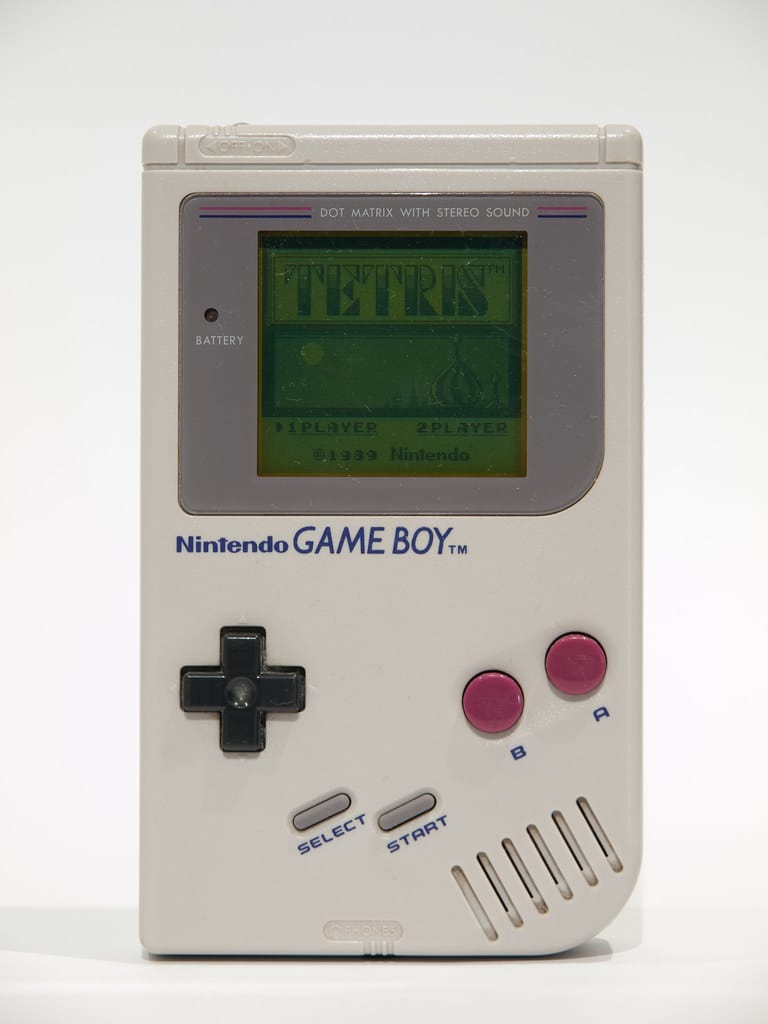
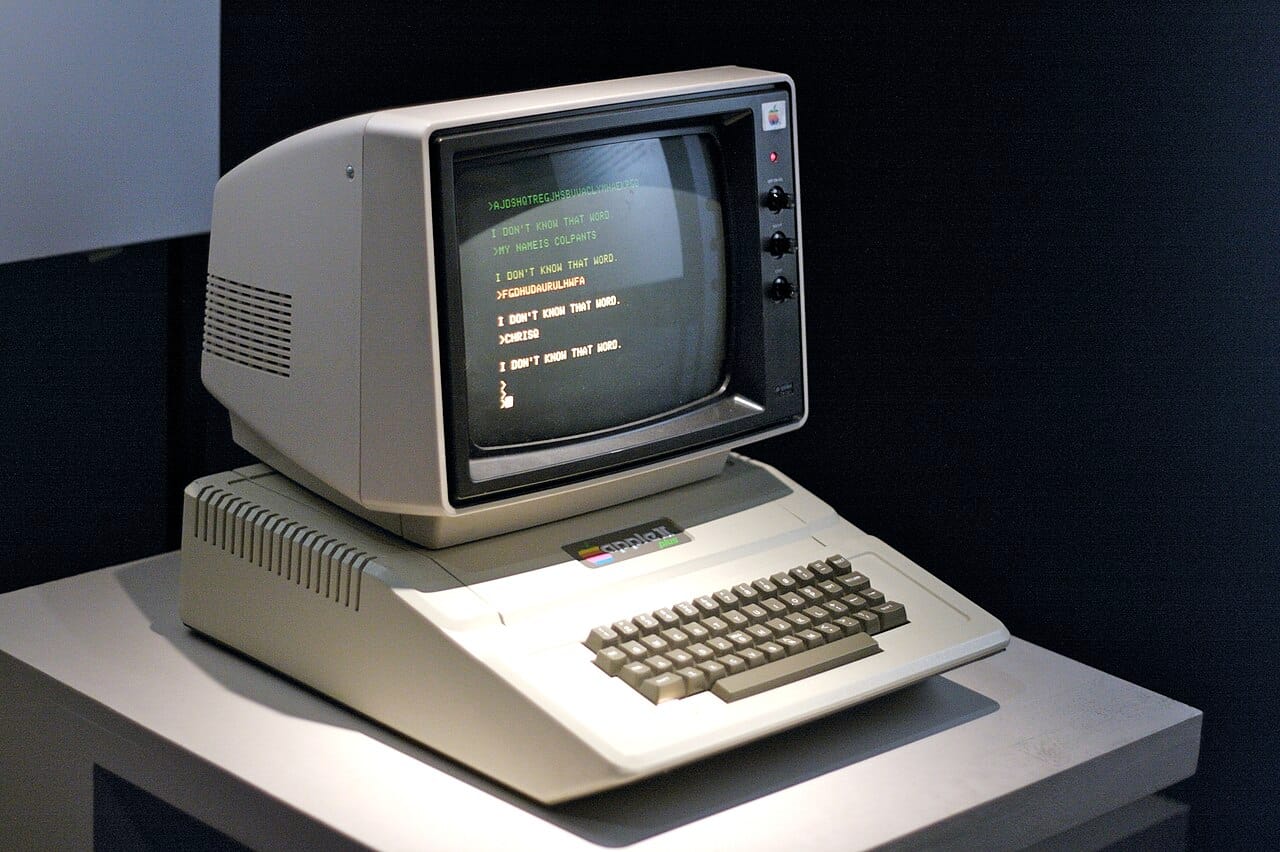
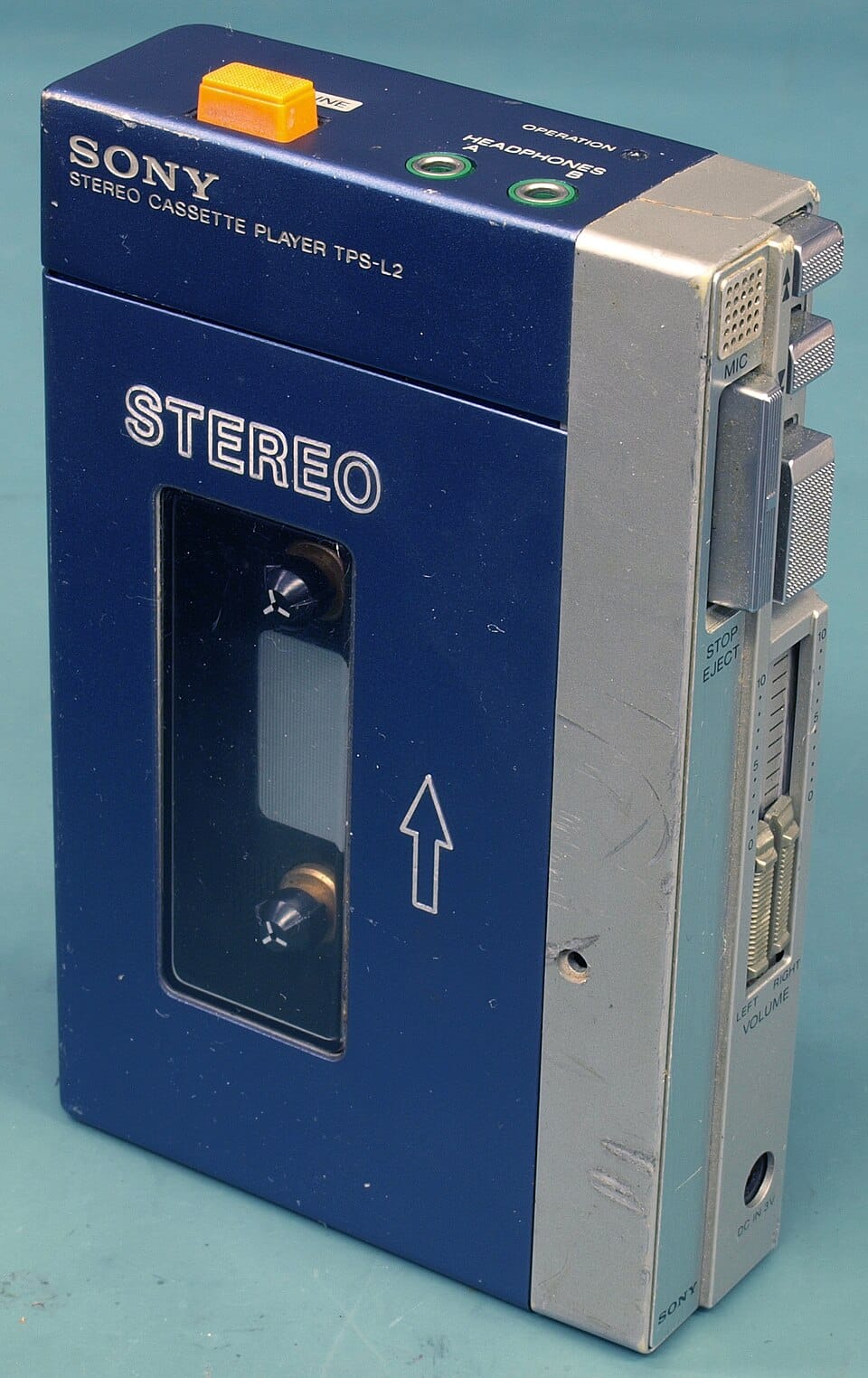
One of my favourite retro-futuristic science fiction aesthetics is that of cassette futurism. It’s built with the technology and world of the latter 20th century (up to the early 1990’s). Think of a world built with pay phones, film photography, fax machines, CRT monitors, dial-up modems, Nintendo Gameboys, Apple II personal computers, dot matrix printers, portable cassette players such as the Sony Walkman, and of course audio cassette tapes. In these worlds, people listen to music with a walkman, watch movies with a VCR, and call their friends with a fixed line phone (you know, one with wires that’s attached to your house, usually in the hallway).
The society in these worlds is pre-internet - people wrote letters, phone calls had to catch the recipient at a fixed location (the landline phone), and houses are painted in more colours than just “landlord white”. The grotesquely reductive minimalism championed by Jony Ive at Apple has not yet eaten the world. Devices are gloriously clunky, coloured, and tactile. Designs for everything from chairs to TVs are not homogenous. There’s competition and variety of choices in terms of shape, colour, and interface.
The technology of a cassette futurism world is one that stepped off the historical path right before the internet seized the world by the neck. The tail end of the historical inspiration for the aesthetic ends around the mid 1990’s. This is mostly because by 1994 the internet was gaining mass adoption. Usenet denizens coined the term “eternal September” to describe the flood of new, inexperienced people that joined en masse that year. By 2000 Apple was adding WiFi in its iBook laptops. By 2004, ADSL internet was becoming widespread. The world of the future was going to be mobile, connected, and ubiquitous.
Cassette futurism is a world that offers a different future. One in which the technology is advanced beyond today’s offerings, but that remains private, tactile, and purposeful. For example, Alien (1979) has constant thrust space travel, vehicles that fly without needing rotors, survivable human stasis, medical scanning, and interstellar mining. It also has text only interfaces for computers, no one has a phone that does everything, and wireless communication is ridiculously slow as to be akin to a telegram in terms of transmission speed.
The cyberpunk classic, Blade Runner (1982), features a similar if not more diverse set of tech. There’s flying cars, bio-engineered humans, and all the computers have text only interfaces. No one has a mobile phone with a touch screen that does everything from calls, to banking. At one point, Deckard pays for a bottle of alcohol with actual cash (“is this enough?”).
Other examples of this aesthetic can be found in Akira, Cowboy Bebop, Andor, and the Fallout video game series.
Attributions
- Original Sony Walkman TPS-L2 from 1979 © 2015 by David L. Jones is licensed under CC BY-SA 4.0
- "The Apple II Computer on display at the Museum Of The Moving Image in New York City." by Marcin Wichary is licensed under CC BY 2.0
- "Nintendo Gameboy" by wwarby is licensed under CC BY 2.0.
- "Nintendo Gameboy" by wwarby is licensed under CC BY 2.0.
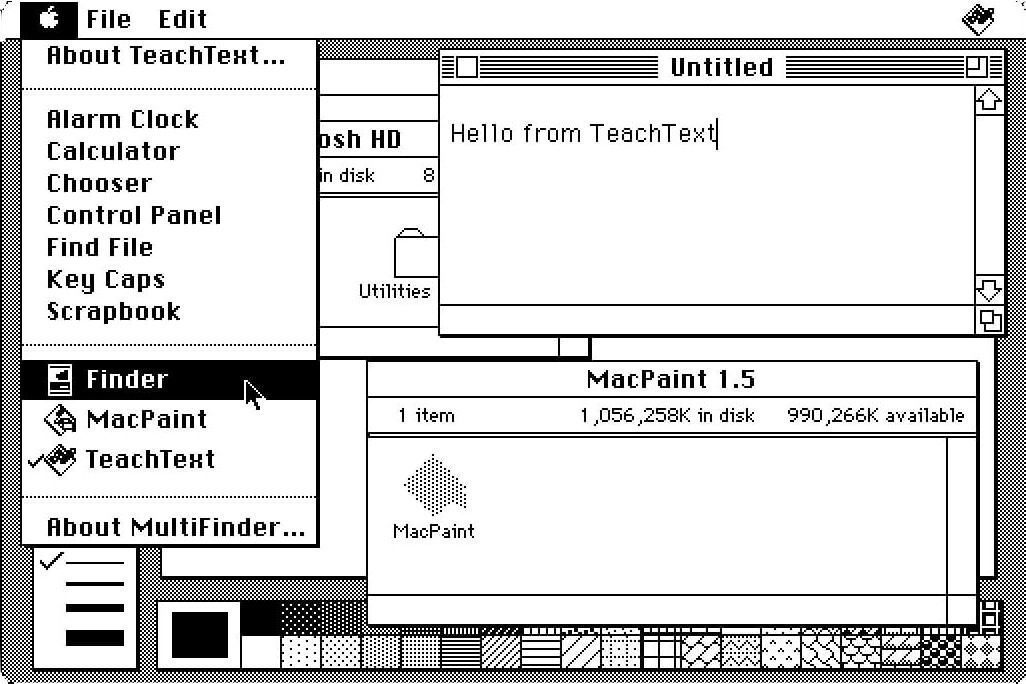
- "MultiFinder System 4.2" by Nikopol-h is in the Public Domain, CC0


The allure of a cassette futurism world stems from the different relationship that society has with technology. It’s not a world saturated with touch screens and omni-devices that promise to do everything with just another app. As evidenced by Blade Runner’s use of cash, it’s also a world in which advanced technology is not a compulsory requirement for participation in society.
Technology from this aesthetic has three core aspects that set it apart. First, it’s repairable. People actually own the devices in their possession. They can and do open them up and tinker with them. Just as our own recent history reflects, independent repair shops are common, and are a successful pathway for entrepreneurs to build a business. Their presence in every city means there’s more than just a successful business - they represent access and availability of service manuals and spare parts for devices. It means there’s an active recycling ecosystem - instead of throwing tech away, it can be repaired, repurposed, or used as spare parts. In the same way as our own early years of the personal computer, repairability leads to thriving enthusiast communities.
As a consequence of this high degree of repairability, devices weren’t locked into the manufacturer’s vision for their use. The “glue it shut and give ‘em nothing” construction of today’s devices wasn’t yet a reality. Devices had ports, and options to expand their hardware after purchase. Personal computers usually supported expansion cards that could add extra functionality such audio, networking, storage, or specialist video encoding. Early laptops had parts intended to be replaceable by their owners - batteries, ram, hard-drives (some early laptops ran on AA batteries - the venerable ST Book for example). Laptops supporting the PC Card standard even allowed beginners to update their laptop’s hardware to suit their needs. The standard provided a slot for storage, networking, modems, and more.
Privacy is the second aspect of cassette futurism. The data wouldn’t move unless you made it move - either by physically carrying a data cassette somewhere or by watching it upload over a dial up link whose speed is measured in kilobytes per second. The internet was more of a distinct place than an omnipotent cloud enveloping us. To access it, one had to explicitly dial up, essentially making a phone call to a server. The requirement for a landline to access it meant our devices couldn’t spy on us. The Sony Walkman on your hip, for instance, couldn’t stream your listening habits to a foreign corporation. Nothing needed to be updated over the air, and your data was exactly where you left it - secure on your computer and unconnected to the internet.
"Dial up connection" by ezwa is in the Public Domain, CC0
Finally, the devices of cassette futurism are more accessible to the ordinary person. They are tactile, with buttons, dials, and switches. There’s actual ports and plugs to expand with. Devices are audible - dial up modems take a minute to make a connection, and sing an song while they do it.
There’s no touchscreens that require sight to operate. Vitally, these devices are knowable to the average person with a little study. Each device serves a single purpose; they are predictable in their operation and do not act in seemingly random ways divorced from the input of their owners.
The storage media is physical - you build a visible collection of audio tapes or vinyl. You can touch the VHS tapes that make up your movie collection. When you say you have a library of music, you mean it in the physical sense as much as the aural sense. People can enjoy the feel of the tapes, the differences in sound that make each vinyl record or cassette tape unique to them, and the sight of the art on the cases.
In a world awash with technology that’s at best passively hostile to its owners, and often actively detrimental, cassette futurism paints an alternative path. One in which the technology in our lives is but one small piece of a larger tapestry of life. It reminds us that technology doesn’t need to surveil us, drive up a rising tide of hate (for the “engagement”), or consume our attention to an unhealthy degree.
Our possessions should serve us, not the foreign mega-corporations that made them, or the intelligence agencies that co-opt them. Cassette futurism is a future past that is both advanced yet private - a world of technology that is private, accessible, and ownable in every sense of the world. Perhaps there’s something we can learn from that in today’s chaotic milieu.
No spam, no sharing to third party. Only you and me.