Field Notes - Cybersickness

This week, I have a bumper crop of neat stuff from across the web. I was busy last weekend beginning my quest to learn to sew. I've successfully bodged together a pencil case. I'm super happy with the way it turned out, considering I forgot to read up on how to sew before showing up at the maker-space.
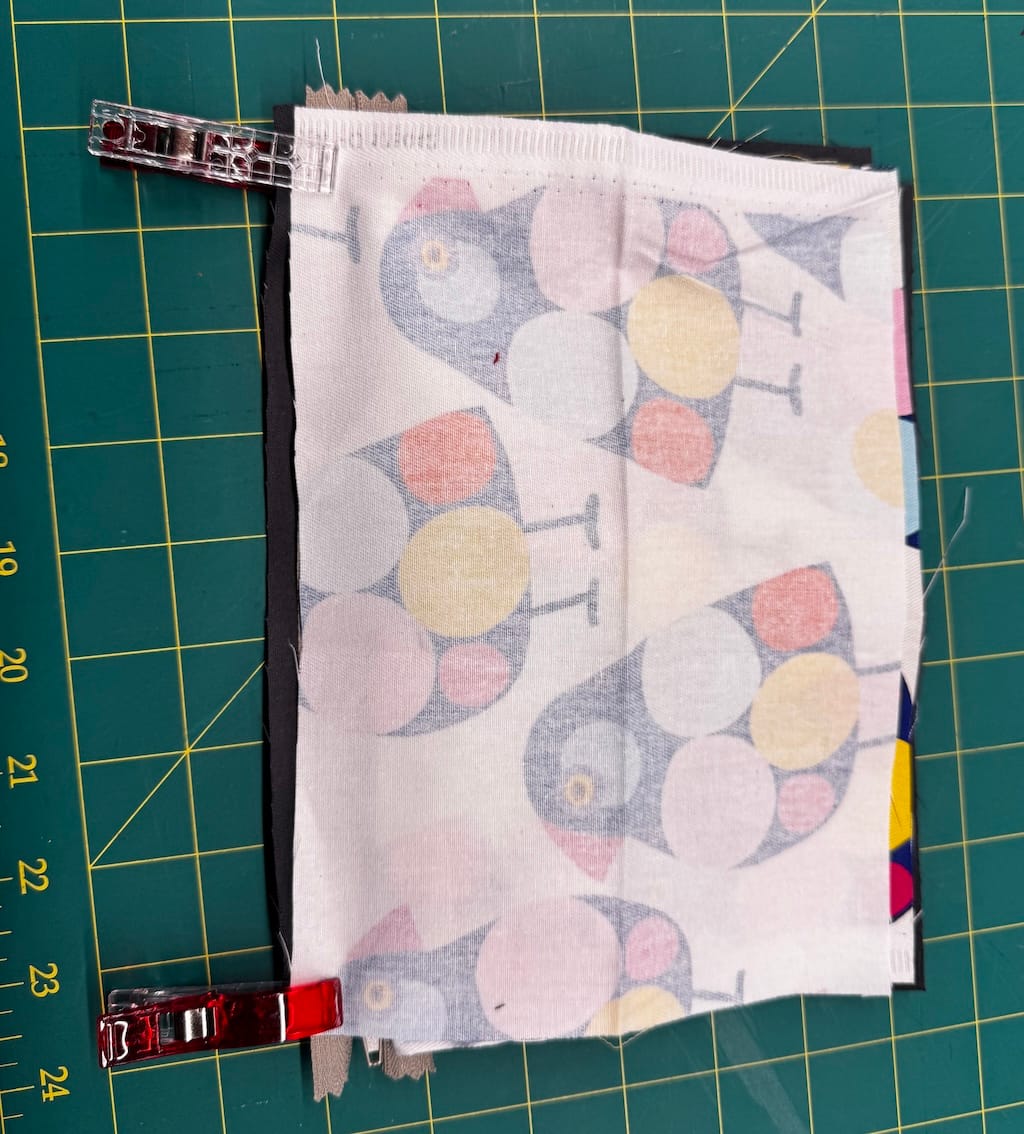
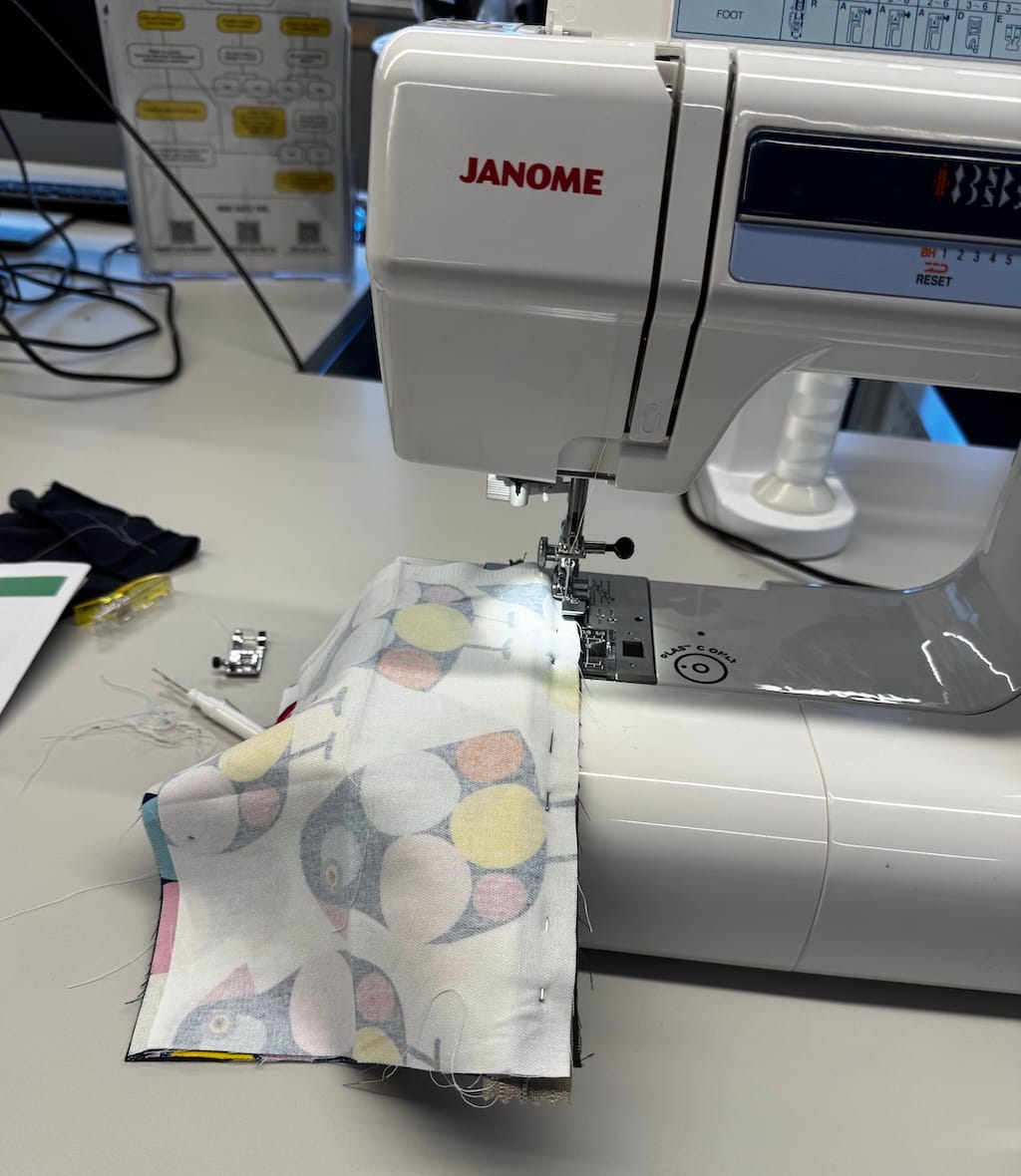
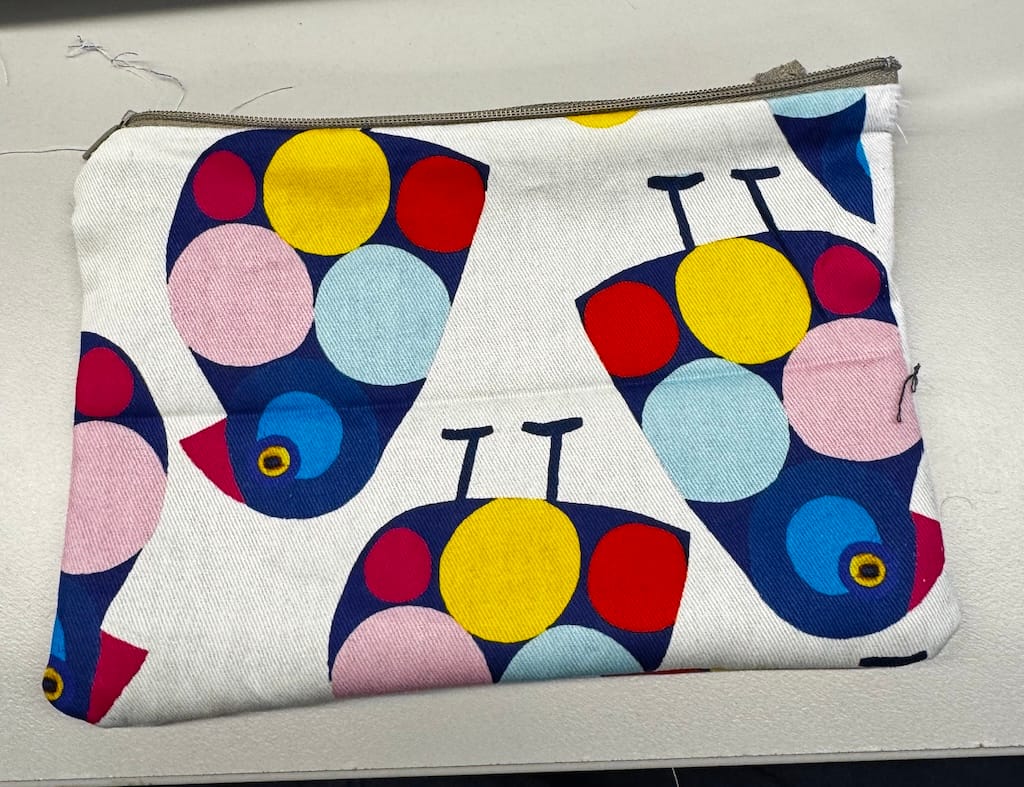
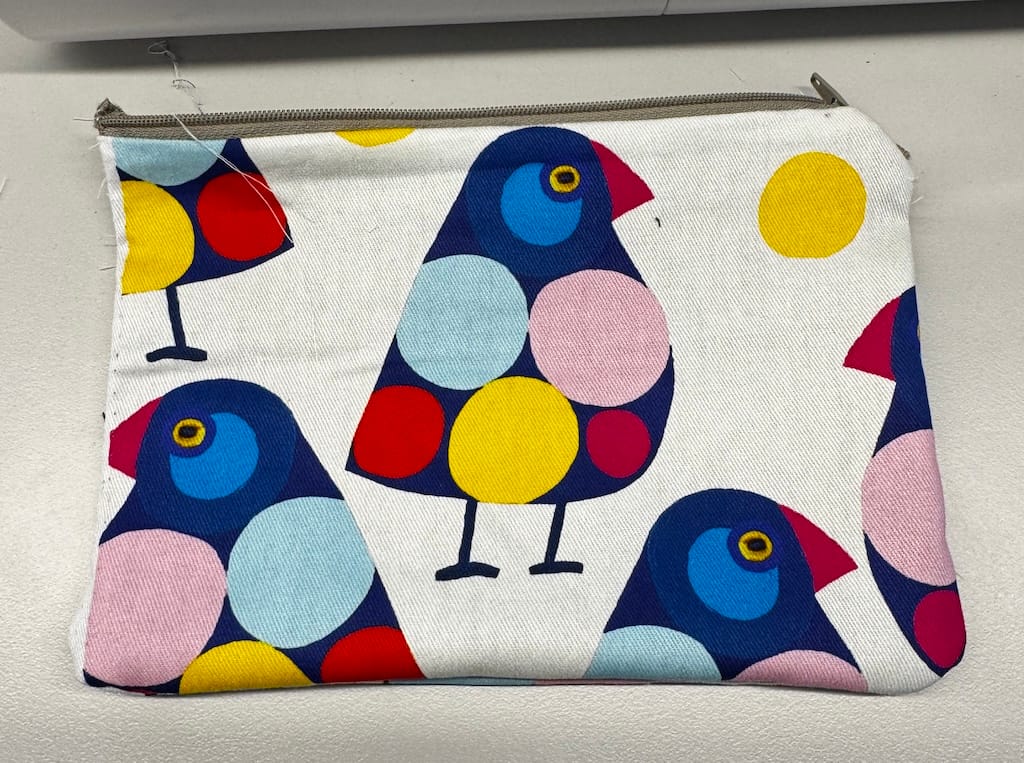
Some process shots, and the finished product. Also, yes, I sewed one side on upside down by accident. I laughed a bit when I saw it.
Apart from my sewing adventures, I've also been reading up on paper. Specifically, Samarkand paper, and the more common name for it today - mulberry paper. It's for a project I've been working on - I'm designing some packaging for it, and got drawn into a rabbit hole. Apparently, mulberry paper is more durable and flexible than ordinary wood pulp paper due to the longer fibres it's made from. It's also more sustainable - the tree isn't killed to make it, since the paper is made from the bark.
In centuries past, the paper was traded along the Silk Road, from the point of manufacture in the Uzbek city of Samarkand. Using a wood product to make paper like this was something of a foreshadowing of things to come - European paper manufacturers used cloth rags to produce paper. One of the drivers to find a way to use wood pulp for paper manufacture was due to the scavenging of cloth supplies in the 19th century.
Something that came up in conversation with a friend this week is the square-cube law. First recorded by Galileo in his 1638 book "Two New Sciences", it is the principle that describes the relationship between a shape's surface area and volume as it grows. Specifically, the surface area increases at the square of the multiplier, and the volume increases at the cube of the volume. Or as Galileo put it: "...ratio of two volumes is greater than the ratio of their surfaces".
As usual, it's one of those concepts that you begin to see everywhere once you know how to apply it. J.B.S. Haldane, unhinged British scientist, published an essay titled "On being the right size", which does a good job of applying the square-cube law to biology. The law explains why humans cannot simply scale up larger than we already are (or scale down) - if we doubled in size, our femurs would break under the weight, and we'd likely die of a lack of oxygen to our extremities.
Insects, being so small, do not have oxygen-carrying bloodstreams. What little oxygen their cells require can be absorbed by simple diffusion of air through their bodies. But being larger means an animal must take on complicated oxygen pumping and distributing systems to reach all the cells.
– J.B.S. Haldane, On Being the Right Size
Once you see it in biology, the same area/volume ratio begins to make itself visible in other places. Companies for instance - as the surface area (people/teams) increases, so too does the volume of information, communication links, and process required. The law starts to explain why Conway's Law holds true, and why larger companies cannot innovate as fast as smaller enterprises, even if they wish they could. The inertia of their titanic volume and the communications intricacies it requires makes it impossible.
Shuffling along to the next curiosity, I present you with electromechanical televisions - a thing I had no idea existed until Monday this week. 1920s state of the art motion picture display technology at its finest. If you've ever seen one of those LED persistence of vision displays, it works on the same principle - the wheel spins fast enough that your eye and brain don't register the blanks between each image.
I've been on something of an IEEE spectrum binge, since the last cool thing on my list is also from them - the cat radar. I learned two things from this: you can buy your own radar (with 20 meter range) from spark fun, and said radar is great for presence detection of animals (including humans). The solution the article's author has come up with to help with his feral cat control problem is some inside of the box thinking at its best.
Story Inspiration of the week
This week saw pre-orders open for the Steam Frame, Valve's standalone VR headset. It looks excellent, but it got me thinking after I saw an IEEE Spectrum article on cybersickness (the nausea that VR induces in some people). Today's inspiration is a cyberpunk world where some people are unable to access the high tech due to a genetic abnormality.
The world of NeoParis
NeoParis - a glittering city built on the ruins of the old Paris (after the machine wars destroyed much of it). The city was rebuilt along the same street lines as its namesake (in the same way London was rebuilt after the Great Fire of 1666). Technology has been woven into the very fabric of the city - dark fibre laid in anticipation of an insatiable appetite for data, solar power cells coating every roof top, and a city-wide mesh network to provide wireless internet access to all.
Society has changed too - the average cyber citizen is threaded with technology via the ubiquitous gossamer wires of the cyber-harness that runs under the skin of their hands, face, and to the wireless AR/VR patch laying under their scalp like a tattoo. These connections and the cornucopia of implants available to upgrade the harness provide live HUDs, touch free payments, gesture control, virtual holograms in every shopfront and all powered by the city's high speed wireless mesh network. Life has never been more open, easy, and convenient for all who wish it.
Well. Not quite all. An unlucky five percent or so of the population are unable to access this utopia. A genetic quirk that causes their bodies to reject the implants means they are outsiders to the city's destiny.
They must make do with a jacquard harness woven into clothing (technology that hasn't advanced much in 50 years), and with a variety of touchscreen devices to connect to the mesh net. A thin, flexible wrist-mounted smartphone (gauntlet) is the more popular option. The jacquard harness has led to those using such devices to be nicknamed "wires", from the wire harness sewn into their clothes. Or more derisively, "glassholes", from their need to use flexible glass smartphones to view the digital world.
The inability to access the increasingly online world is treated more and more as a disability, a defect of flesh and mind. Not that it was always like this - the Jacquard harness used to be state of the art for all.
Enter Marijn Gray, protagonist and wire.
The vending machine was refusing payment, as per usual, Marijn thought. No one designed for glass anymore - AR first surfaces, and the wires get what the intern slobbed out for glass. They stabbed at the glowing gauntlet touchscreen encircling their wrist and waved the fingerless jacquard glove over the terminal screen. It was like some kind of arcane ritual with this stuff. Finally, the transaction popped up on the screen with a happy ping sound. Some success at last, just need to wait for the food.
They stood to one side, and gathered the essentials for their incoming ramen - disposable chopsticks, spoon, some garnishes. The gauntlet pinged. Food was ready. They tapped the notification, and the QR code to open the collection box appeared. It took two tries to get it to scan because some scrote had scratched a dick into the lens. Marijn sighed, and grabbed their bowl of noodles.
They found a seat near the entrance to the square and dug in. For a brief few moments, the bustle and noise of the busy laneway faded into the background as Marijn shovelled noodles and pork into their face. Ramen was god's gift to mankind they decided. Absolutely delicious. Pausing to breath, Marijn looked up at the square. The hair on the back of their neck tingled with suspicion. Something was...off...with the crowd; it was like it had a raw edge, like it was holding its breath for something. And why were the two police officers at the laneway entrance wearing black hockey helmets?
The moment came with a crack of broken glass, and a yell from behind Marijn. They didn't know what they were expecting to see when they glanced over their shoulder. But a second glass bottle shattering on the black hockey helmet of a gorilla sized police officer was not it. The crowd hushed for half a second. Then everything was drowned out in the roar, as all hell broke loose.
I’m glad you’re here,
Justin
This work is licensed under CC BY-SA 4.0
No spam, no sharing to third party. Only you and me.